
How Monthly Website Maintenance Supports Your Digital Marketing Strategy
Modern marketing depends on a website that is fast, reliable, and measurable. Search teams need clean technical signals and current content. Paid media teams need landing pages that load quickly and convert. Analytics teams need tracking that reflects reality. Privacy and compliance teams need consent and disclosures that match current rules.

Monthly website maintenance is the operational layer that keeps all of this aligned. When maintenance is embedded in the marketing rhythm, campaigns run on a site that is ready for attention, and the results that flow into reports are trustworthy enough to guide the next investment.
What is the connection between website maintenance and digital marketing results
Website maintenance is the recurring verification and improvement of security, performance, search signals, content accuracy, and measurement. It protects marketing budgets by reducing the avoidable friction that causes visitors to bounce or abandon forms. It keeps critical pages available during promotions and seasons of high demand.
It ensures that the data in dashboards reflects what customers actually do rather than what tags were supposed to capture. In practice this means that monthly maintenance prevents small defects from eroding results and it turns the site into a consistent foundation for creative work and channel strategy.
How do monthly maintenance checks protect search visibility
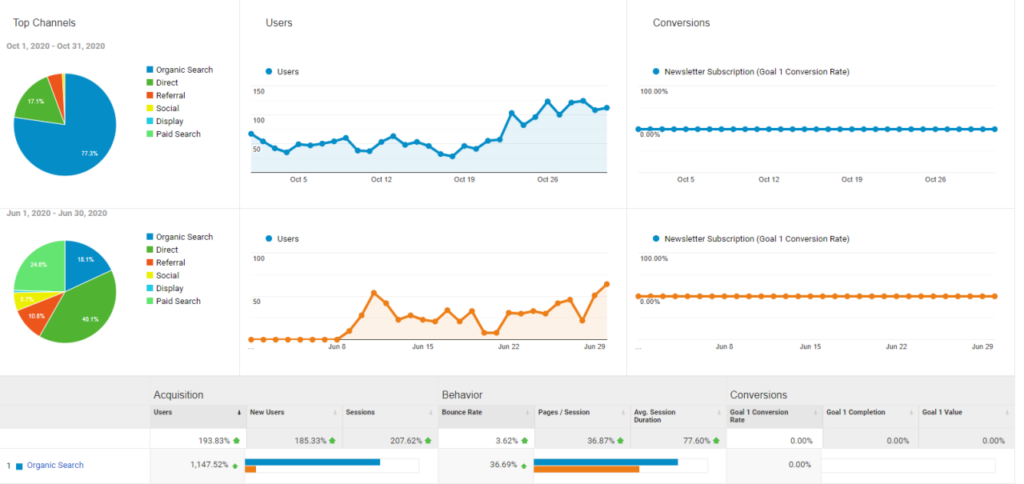
Search visibility rests on technical clarity and editorial freshness. A monthly pass through robots rules, sitemaps, internal links, redirects, and canonical signals preserves crawlability and indexation, which keeps discovery steady even as the catalogue evolves. Review of the experience signals on top landing pages ensures that loading, interaction responsiveness, and layout stability remain strong enough to satisfy user expectations.
Headlines, introductions, and subheads are refreshed to align with the phrases that audiences now use, and thin or outdated pages are updated or retired so that the overall story remains focused. The cumulative effect is a site that search engines understand and that readers find credible.
How does maintenance improve landing page performance for paid campaigns

Paid traffic exposes any weakness in a page with brutal speed. Monthly maintenance reduces that risk by pairing technical checks with conversion checks ahead of launches. Caching, compression, image sizing, and script cost are profiled so that pages respond quickly when spend begins. Forms, trust elements, and error states are verified so that visitors encounter a path that reads clearly and behaves predictably.
Post click speed and clarity work together to lower bounce and raise completion, which lifts the return on ad spend without changing the media budget. This is service journalism for marketers because it translates operational habits into measurable campaign gains.
How does monthly maintenance keep analytics and attribution accurate
Decision quality depends on measurement accuracy. Each month, tags and events are verified on the pages that matter most to marketing outcomes, and consent behavior is confirmed so that tracking reflects user choices and policy commitments. Conversions are reconciled with business systems so order counts and lead totals match reality.
Significant changes are annotated so analysts can connect trend shifts to site changes rather than guessing. Over time this discipline produces a record of change that allows leaders to trust comparative results and to adjust budgets with confidence.
How do privacy and compliance fit into monthly maintenance for marketers
Campaign continuity increasingly depends on privacy and consent that work as intended. A monthly routine reviews consent banner behavior, privacy notices, and data retention settings to ensure that they reflect current standards. Signals are traced through analytics, advertising, and email platforms to confirm that preferences are honoured consistently.
Proactive checks prevent last minute compliance fixes that interrupt campaigns and they reinforce a reputation for responsible data use that customers and editors notice. Treating privacy as part of maintenance keeps legal obligations and marketing objectives aligned.
Which marketing pages should be prioritised in the monthly cycle
Not every page needs attention every month. Prioritise the assets that carry the most risk and reward. Top search landers, paid destinations, and seasonal or campaign pages belong at the front of the queue because even small defects there have outsized impact. Product and pricing pages require coordination with merchandising and finance so that details remain current.
Resource hubs and thought leadership deserve periodic refreshes of statistics, media, and internal links so that authority does not fade. This focus ensures that maintenance time lands where it protects revenue and credibility.
How should marketing and web teams work together on maintenance

Coordination turns a checklist into an operating rhythm. A shared calendar sets a monthly window for updates, tests, and reports. Web teams own staging and live verification, and marketing teams own copy, offers, and calls to action. Together they produce a single health and performance report that includes availability, experience metrics on top pages, search signals, conversion outcomes, and the short list of issues that threaten live campaigns.
Escalation paths are clear enough that time sensitive fixes do not stall in email. The tone is professional and calm because everyone can see the same status at the same time.
What metrics prove that maintenance supports marketing ROI
Executives respond to evidence presented as clear trend lines. Track mean time to recover and page response times on key journeys to understand operational readiness. Track the experience signals on top landing pages and the completion rates of forms connected to paid and email campaigns. Track assisted visits from internal links that were added during refreshes so you can see the cluster effect develop.
Present these measures side by side with media spend and creative changes and annotate dates when major site changes shipped. The picture that emerges is a credible link between maintenance and marketing outcomes.
How to embed maintenance into the marketing operating rhythm
Success rests on a routine that teams can sustain. In the week before a major campaign, run a performance pass on destination pages, verify forms and tracking, and confirm that consent behavior is consistent. During the campaign, monitor error rates, responsiveness, and conversion health and fix regressions quickly. After the campaign, capture lessons and schedule the improvements that will raise the next result.
On a monthly cadence, combine these actions with the broader maintenance tasks that protect search, security, and recovery. Leaders then receive a single report that ties website health to channel performance and that tells them where to focus next month.
Marketing works better on a maintained website. Monthly maintenance protects search visibility, increases the odds that paid visitors convert, keeps analytics and attribution accurate, and ensures that privacy and compliance remain in step with policy and law. The practice is simple and deliberate.
Verify, improve, and report on a schedule that the whole team recognises, then invest in creative and media with the confidence that the site can carry the result. When maintenance becomes part of the marketing operating rhythm, performance steadies and the signal in the data gets clearer.
